Structure
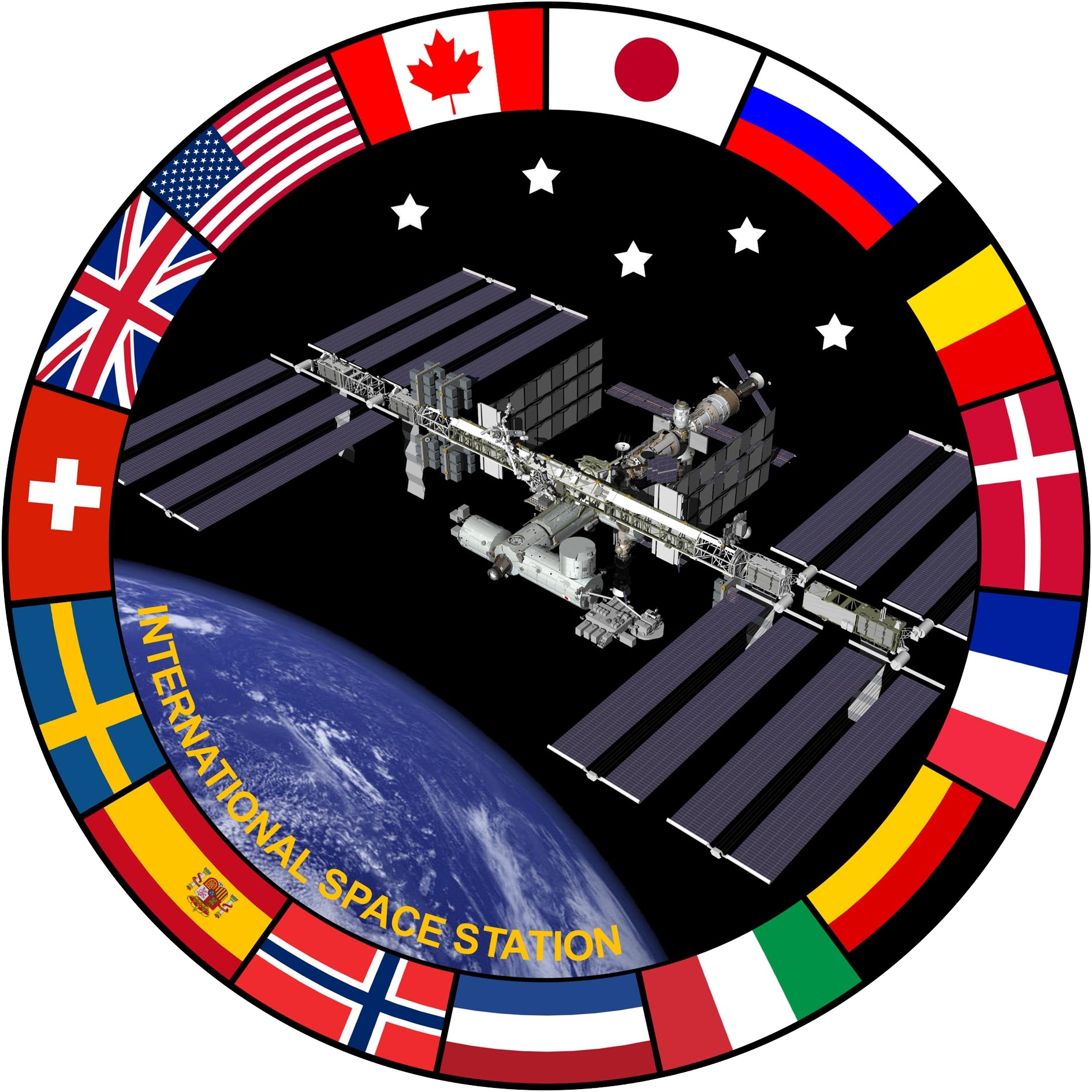
The ISS functionsas a modular space station, enabling the addition or removal of modules from its structure for increased adaptability.
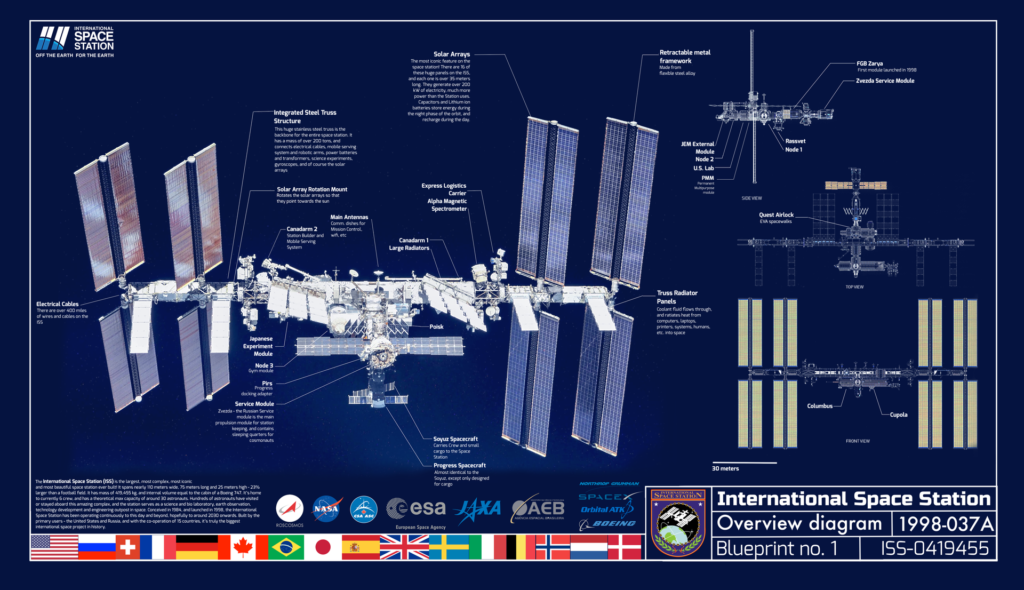
Overview blueprint of components

The ISS exterior and steelwork taken on 8 November 2021, from the departing SpaceX Crew-2 capsule
Diagram structure of International Space Station after installation of iROSA solar arrays (as of 2023)

The ISS is made up of 16 pressurized modules:
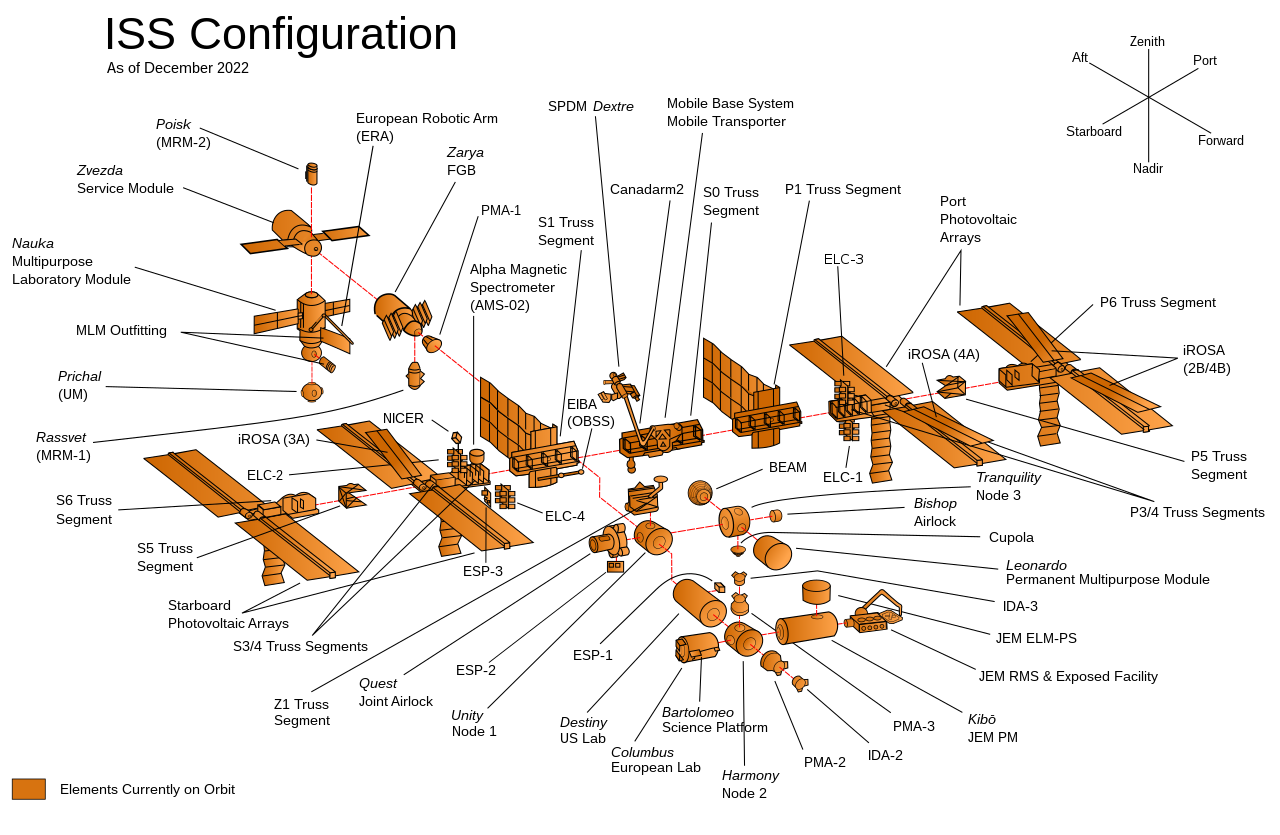
- six Russian modules (Zarya, Zvezda, Poisk, Rassvet, Nauka, and Prichal)
- eight US modules (BEAM, Leonardo, Harmony, Quest, Tranquility, Unity, Cupola, and Destiny)
- one Japanese module (Kibō)
- one European module (Columbus)
Russian Modules
Zarya also known as the Functional Cargo Block or FGB is the first module of the ISS to have been launched.The FGB provided electrical power, storage, propulsion, and guidance to the ISS during the initial stage of assembly. With the launch and assembly in orbit of other modules with more specialized functionality, Zarya, as of August 2021, is primarily used for storage, both inside the pressurized section and in the externally mounted fuel tanks. The Zarya is a descendant of the TKS spacecraft designed for the Russian Salyut program. The name Zarya (“Dawn”) was given to the FGB because it signified the dawn of a new era of international cooperation in space. Although it was built by a Russian company, it is owned by the United States.
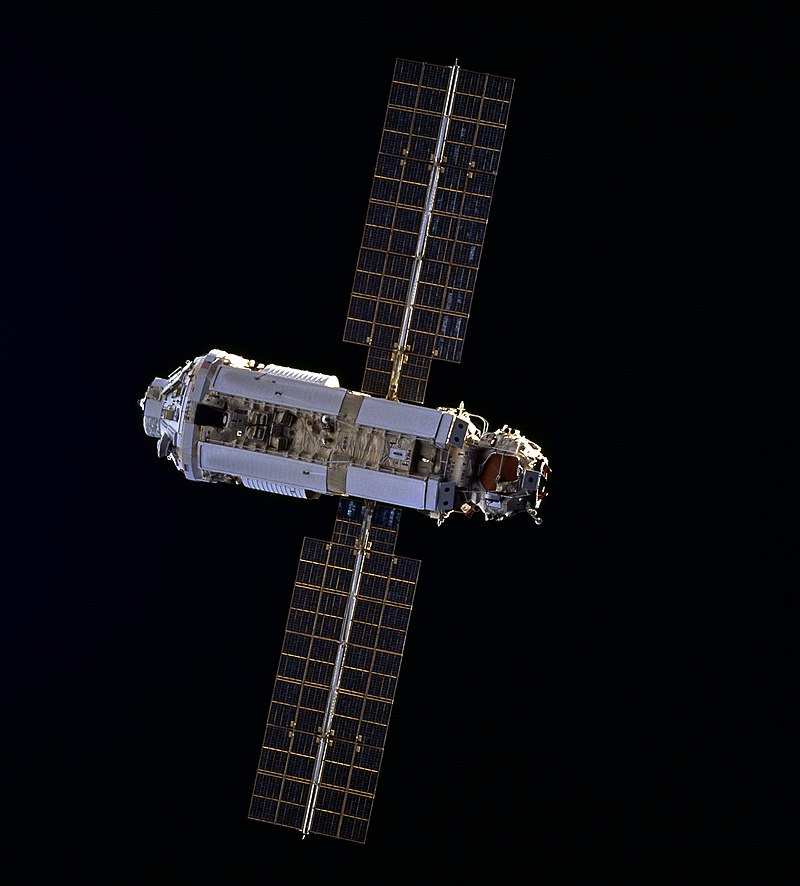
Zarya
Zvezda was the third module launched to the station, and provides all of the station’s life support systems, some of which are supplemented in the USOS, as well as living quarters for two crew members. It is the structural and functional center of the Russian Orbital Segment, which is the Russian part of the ISS. Crew assemble here to deal with emergencies on the station. The module was manufactured by RKK Energia, with major sub-contracting work by GKNPTs Khrunichev.Zvezda was launched on a Proton rocket on 12 July 2000, and docked with the Zarya module on 26 July 2000.
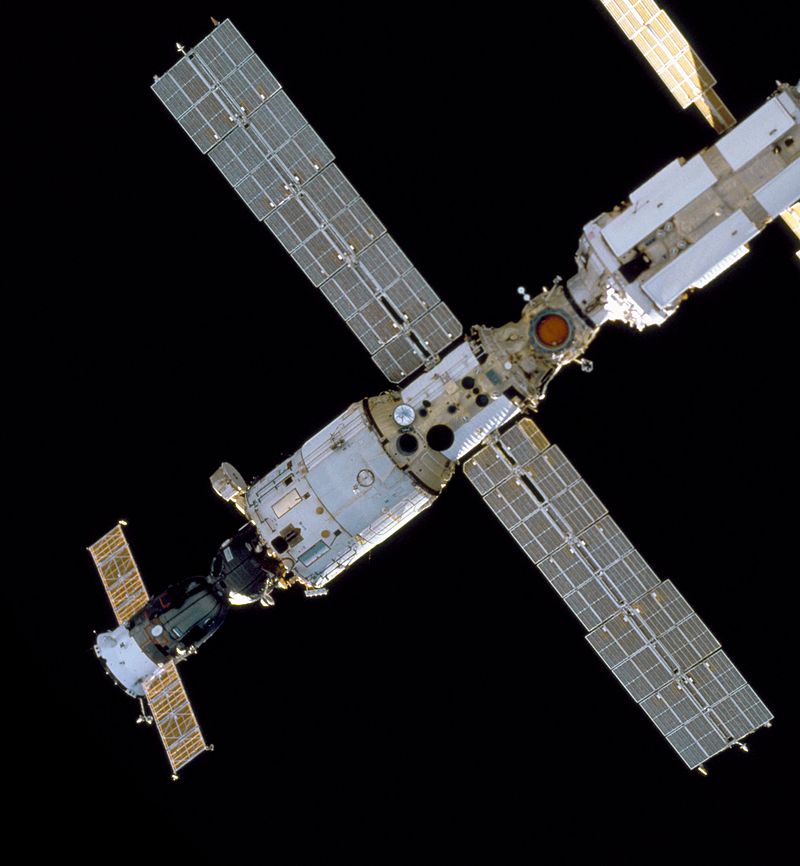
Zvezda
Poisk was launched on 10 November 2009 attached to a modified Progress spacecraft, called Progress M-MIM2, on a Soyuz-U rocket from Launch Pad 1 at the Baikonur Cosmodrome in Kazakhstan. Poisk is used as the Russian airlock module, containing two identical EVA hatches. An outward-opening hatch on the Mir space station failed after it swung open too fast after unlatching, because of a small amount of air pressure remaining in the airlock. All EVA hatches on the ISS open inwards and are pressure-sealing. Poisk is used to store, service, and refurbish Russian Orlan suits and provides contingency entry for crew using the slightly bulkier American suits.
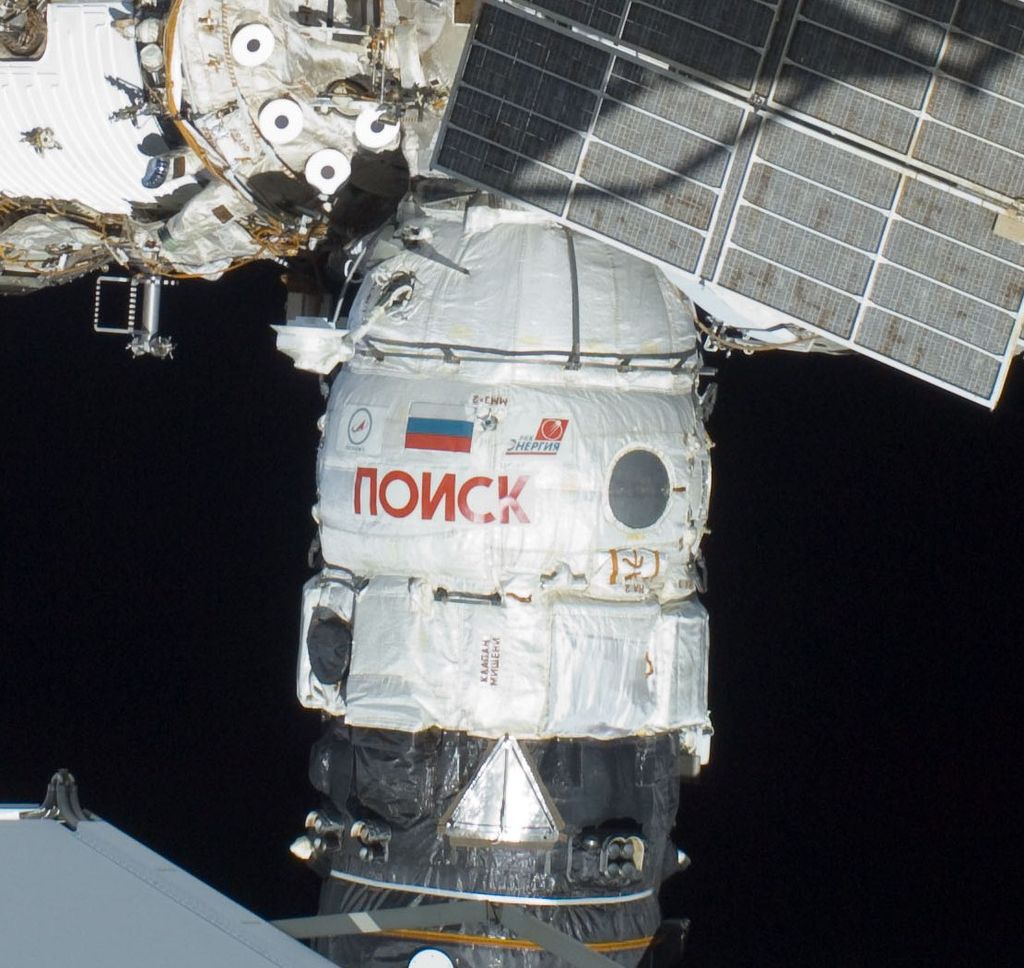
Poisk
Rassvet , also known as the Mini-Research Module 1 (MRM-1) and formerly known as the Docking Cargo Module (DCM), is a component of the International Space Station (ISS). The module’s design is similar to the Mir Docking Module launched on STS-74 in 1995. Rassvet is primarily used for cargo storage and as a docking port for visiting spacecraft. It was flown to the ISS aboard Space Shuttle Atlantis on the STS-132 mission on 14 May 2010, and was connected to the ISS on 18 May 2010.The hatch connecting Rassvet with the ISS was first opened on 20 May 2010.On 28 June 2010, the Soyuz TMA-19 spacecraft performed the first docking with the module.
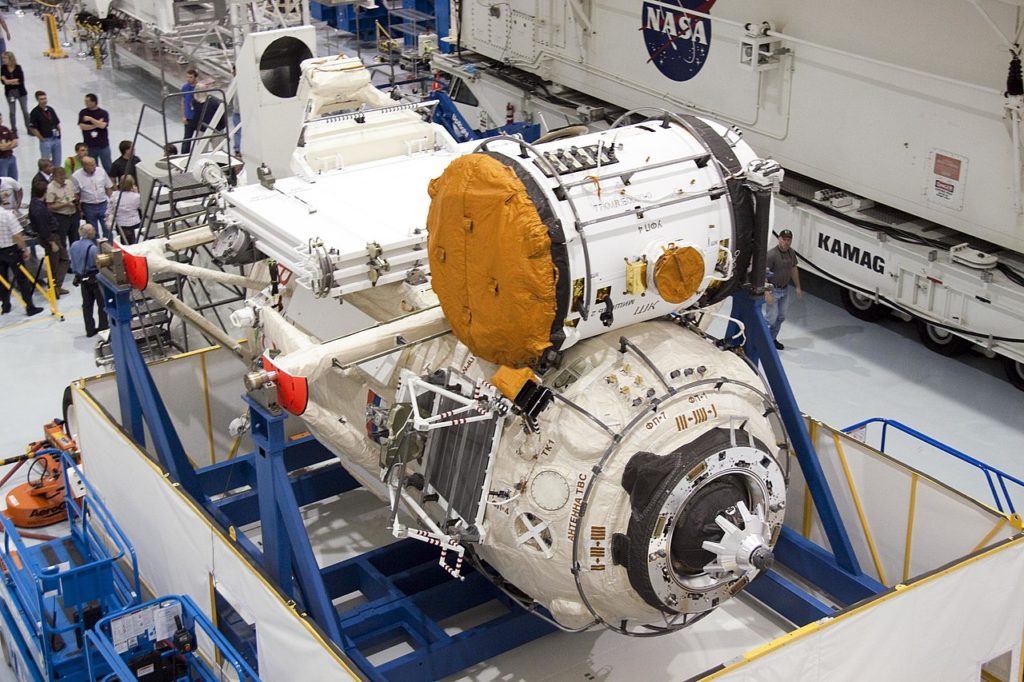
Rassvet
Nauka also known as the Multipurpose Laboratory Module-Upgrade (MLM-U), is a Roscosmos-funded component of the ISS that was launched on 21 July 2021, 14:58 UTC. In the original ISS plans, Nauka was to use the location of the Docking and Stowage Module (DSM), but the DSM was later replaced by the Rassvet module and moved to Zarya‘s nadir port. Nauka was successfully docked to Zvezda‘s nadir port on 29 July 2021, 13:29 UTC, replacing the Pirs module.
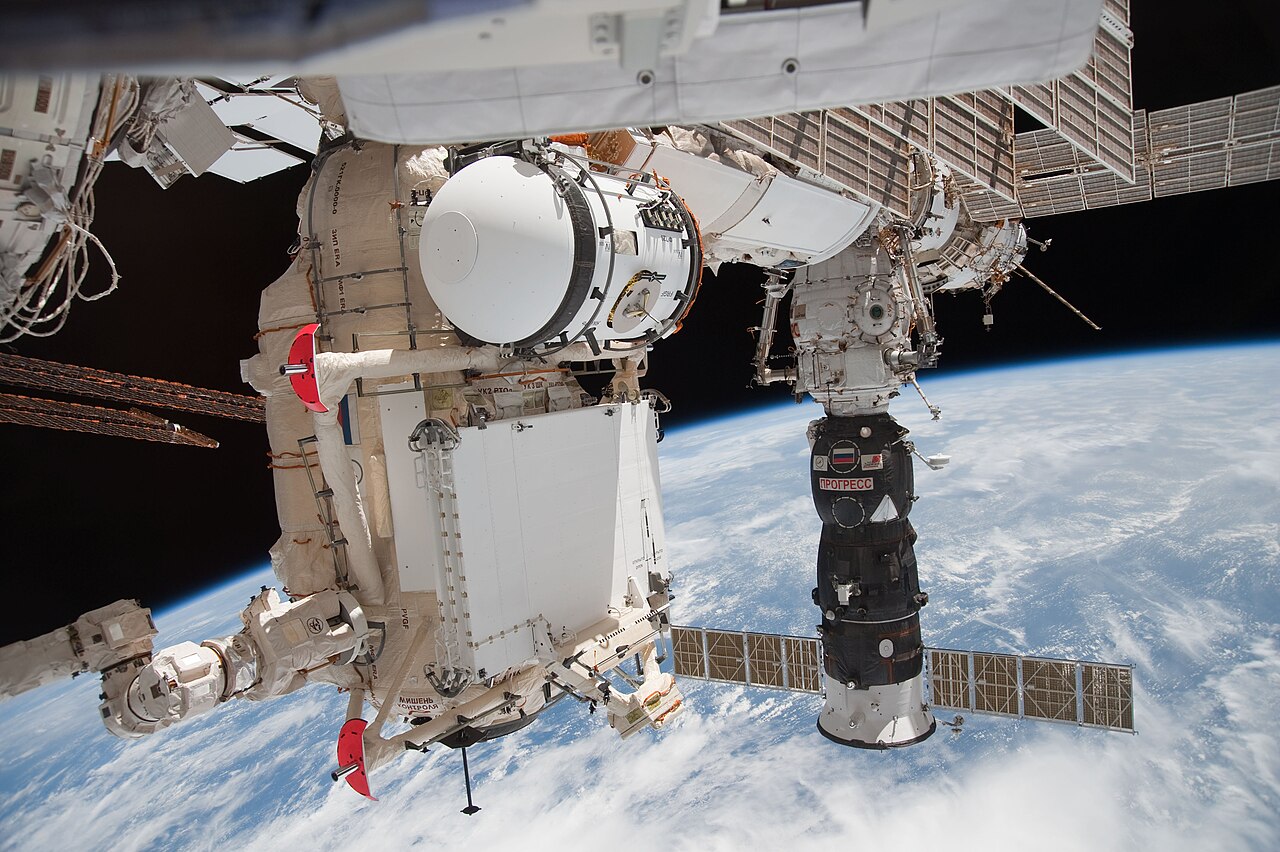
Nauka
Prichal, also known as Uzlovoy Module or UM e (8,800 lb) ball-shaped module that will provide the Russian segment additional docking ports to receive Soyuz MS and Progress MS spacecraft. UM was launched in November 2021. It was integrated with a special version of the Progress cargo spacecraft and launched by a standard Soyuz rocket, docking to the nadir port of the Nauka module. One port is equipped with an active hybrid docking port, which enables docking with the MLM module.
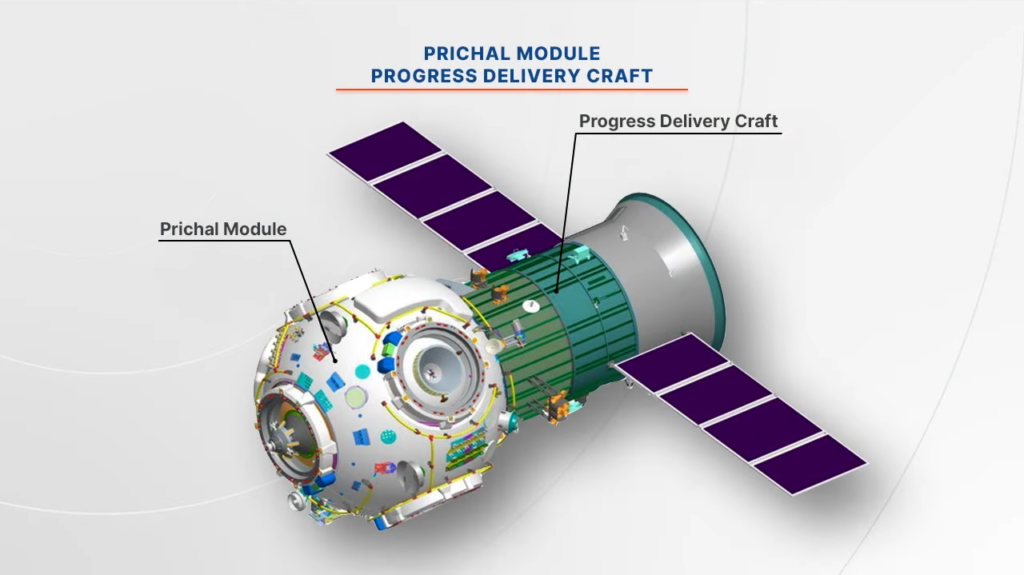
Prichal
United States Modules
The Bigelow Expandable Activity Module (BEAM) is an experimental expandable space station module developed by Bigelow Aerospace, under contract to NASA, for testing as a temporary module on the International Space Station (ISS) from 2016 to at least 2020.
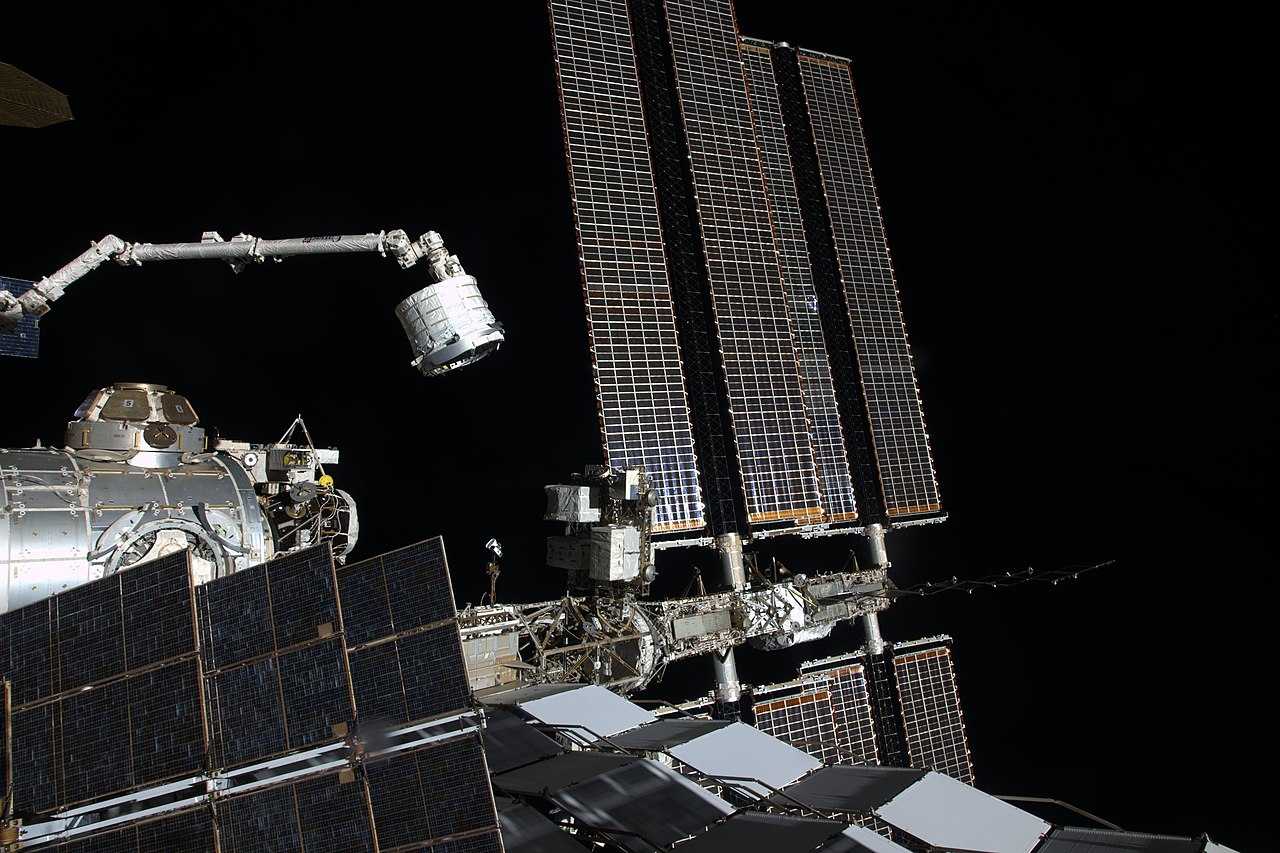
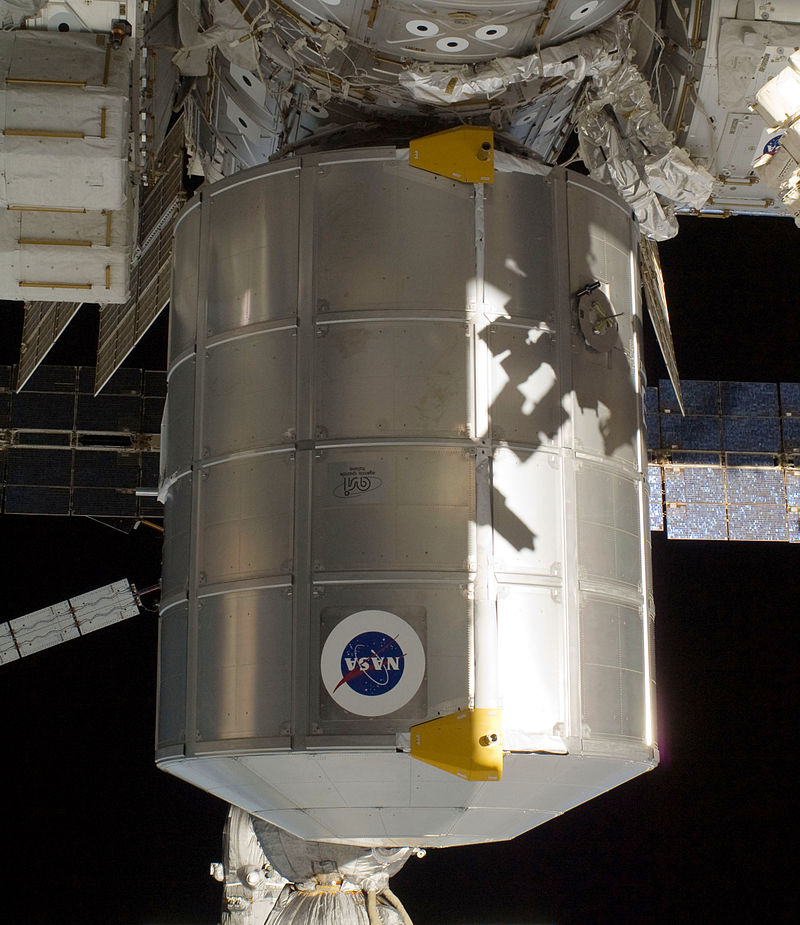
The Leonardo Permanent Multipurpose Module (PMM) is a module of the International Space Station. It was flown into space aboard the Space Shuttle on STS-133 on 24 February 2011 and installed on 1 March. Leonardo is primarily used for storage of spares, supplies and waste on the ISS, which was until then stored in many different places within the space station. It is also the personal hygiene area for the astronauts who live in the US Orbital Segment. The Leonardo PMM was a Multi-Purpose Logistics Module (MPLM) before 2011, but was modified into its current configuration. It was formerly one of two MPLM used for bringing cargo to and from the ISS with the Space Shuttle. The module was named for Italian polymath Leonardo da Vinci.
Harmony, also known as Node 2, is the “utility hub” of the ISS. It connects the laboratory modules of the United States, Europe and Japan, as well as providing electrical power and electronic data. Sleeping cabins for four of the crew are housed here.
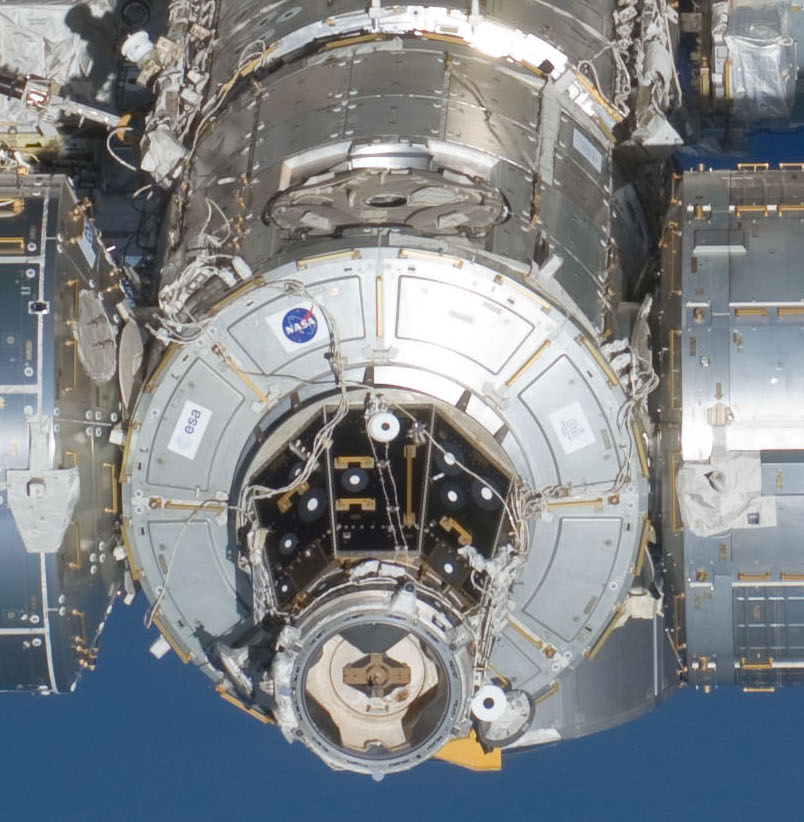
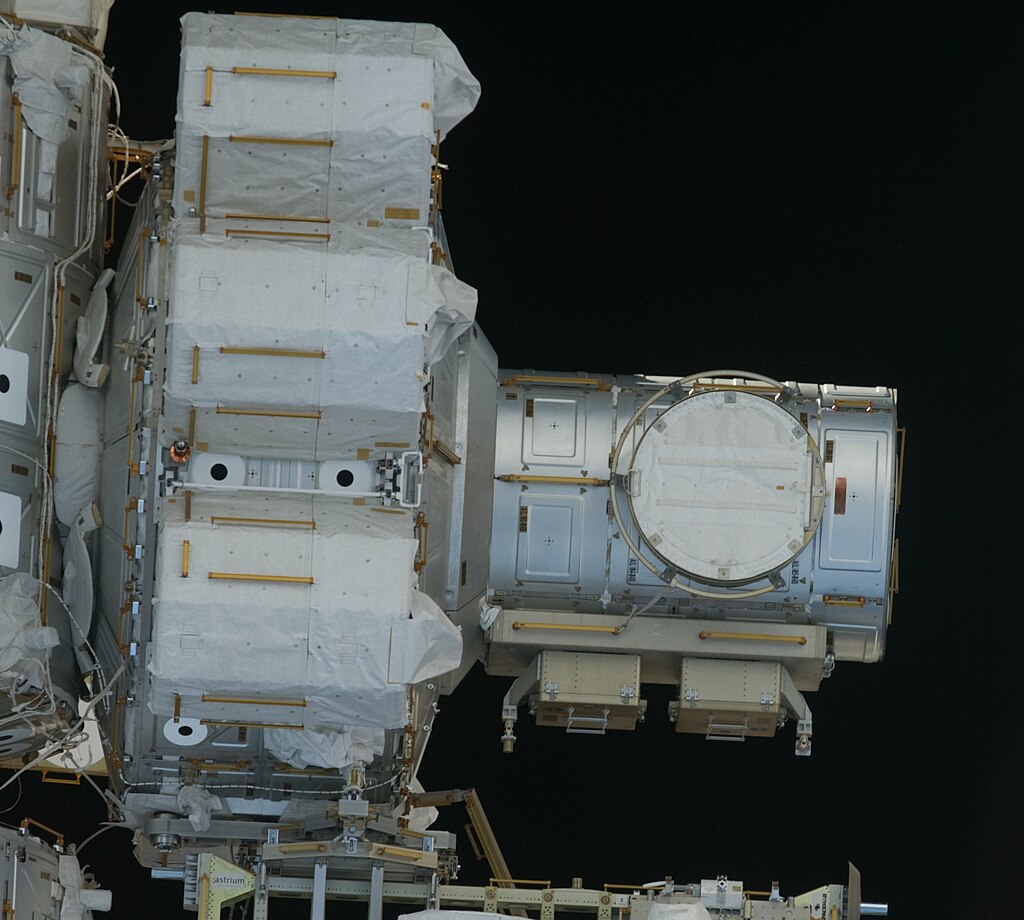
Quest is provided by the U.S. and provides the capability for ISS-based Extravehicular Activity (EVA) using either a U.S. Extravehicular Mobility Unit (EMU) or Russian Orlan EVA suits. Before the launch of this airlock, EVAs were performed from either the U.S. Space Shuttle (while docked) or from the Transfer Chamber on the Service Module. Due to a variety of system and design differences, only U.S. space suits could be used from the Shuttle and only Russian suits could be used from the Service Module. The Joint Airlock alleviates this short-term problem by allowing either (or both) spacesuit systems to be used.
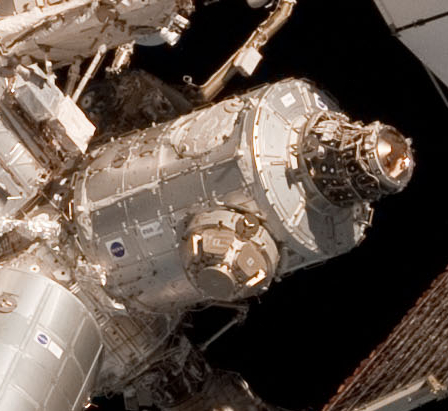
Tranquility, also known as Node 3, is a module of the ISS. It contains environmental control systems, life support systems, a toilet, exercise equipment, and an observation cupola.
The European Space Agency and the Italian Space Agency had Tranquility manufactured by Thales Alenia Space. A ceremony on 20 November 2009 transferred ownership of the module to NASA.On 8 February 2010, NASA launched the module on the Space Shuttle’s STS-130 mission.
The Unity connecting module, also known as Node 1, is the first U.S.-built component of the ISS. It connects the Russian and U.S. segments of the station, and is where crew eat meals together.
The module is cylindrical in shape, with six berthing locations (forward, aft, port, starboard, zenith, and nadir) facilitating connections to other modules. Unity measures 4.57 metres (15.0 ft) in diameter, is 5.47 metres (17.9 ft) long, made of steel, and was built for NASA by Boeing in a manufacturing facility at the Marshall Space Flight Center in Huntsville, Alabama. Unity is the first of the three connecting modules; the other two are Harmony and Tranquility.

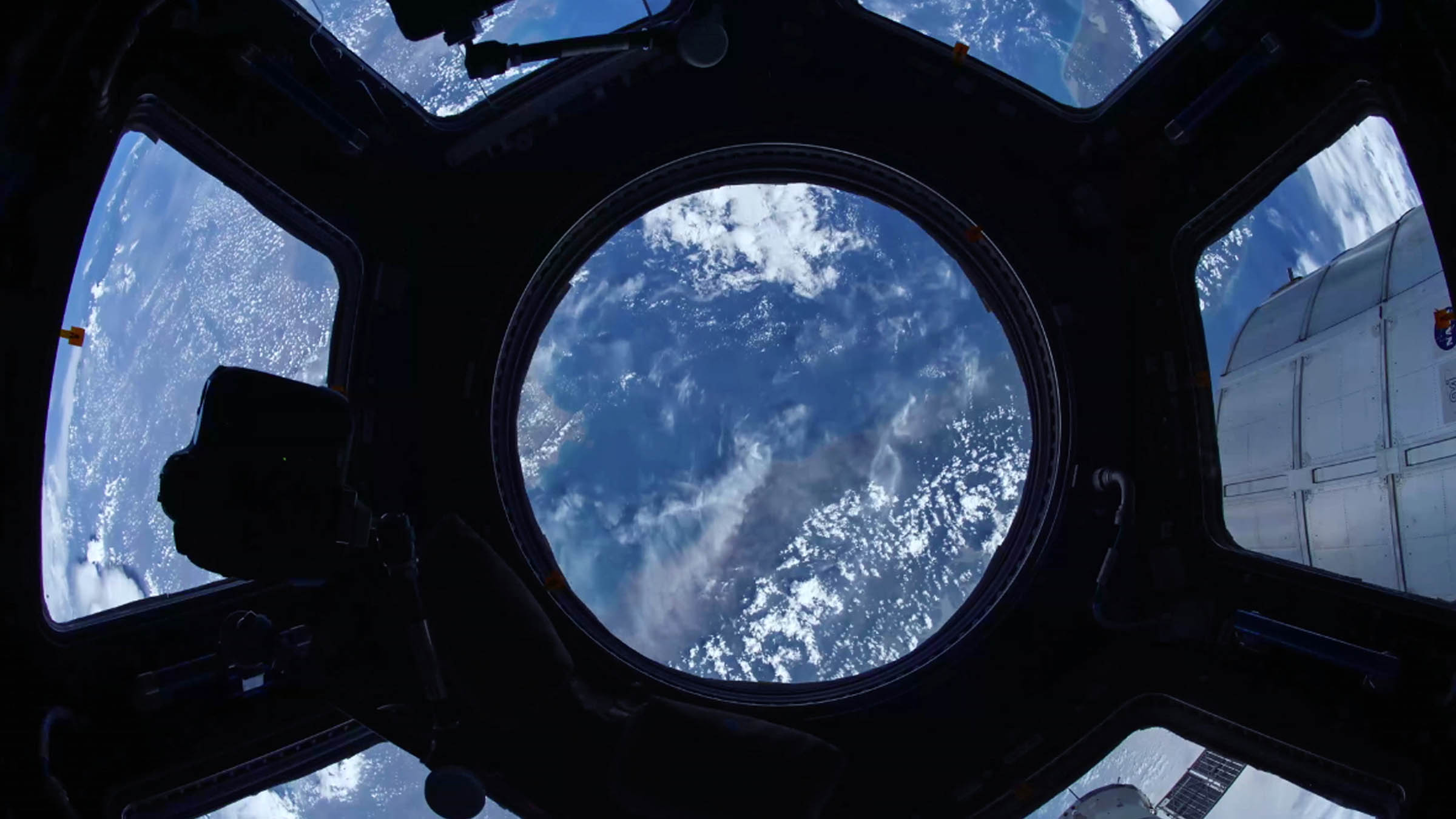
The Cupola is an ESA-built observatory module of the ISS. Its seven windows are used to conduct experiments, dockings and observations of Earth. It was launched aboard Space Shuttle mission STS-130 on 8 February 2010 and attached to the Tranquility (Node 3) module. With the Cupola attached, ISS assembly reached 85 per cent completion. The Cupola‘s central window has a diameter of 80 cm (31 in).
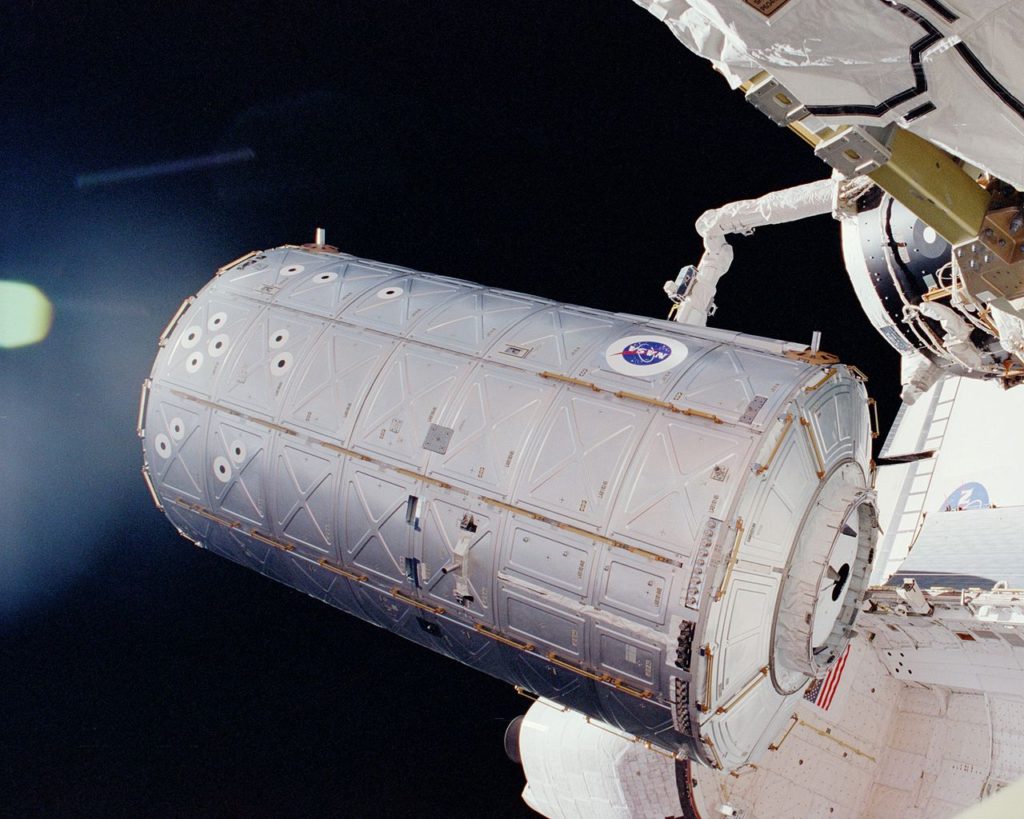
The Destiny module, also known as the U.S. Lab, is the primary operating facility for U.S. research payloads aboard the ISS. It was berthed to the Unity module and activated over a period of five days in February 2001.Destiny is NASA’s first permanent operating orbital research station since Skylab was vacated in February 1974. The Boeing Company began construction of the 14.5-tonne (32,000 lb) research laboratory in 1995 at the Michoud Assembly Facility and then the Marshall Space Flight Center in Huntsville, Alabama.Destiny was shipped to the Kennedy Space Center in Florida in 1998, and was turned over to NASA for pre-launch preparations in August 2000. It launched on 7 February 2001, aboard the Space Shuttle Atlantis on STS-98.Astronauts work inside the pressurized facility to conduct research in numerous scientific fields. Scientists throughout the world would use the results to enhance their studies in medicine, engineering, biotechnology, physics, materials science, and Earth science.
Japanese Module
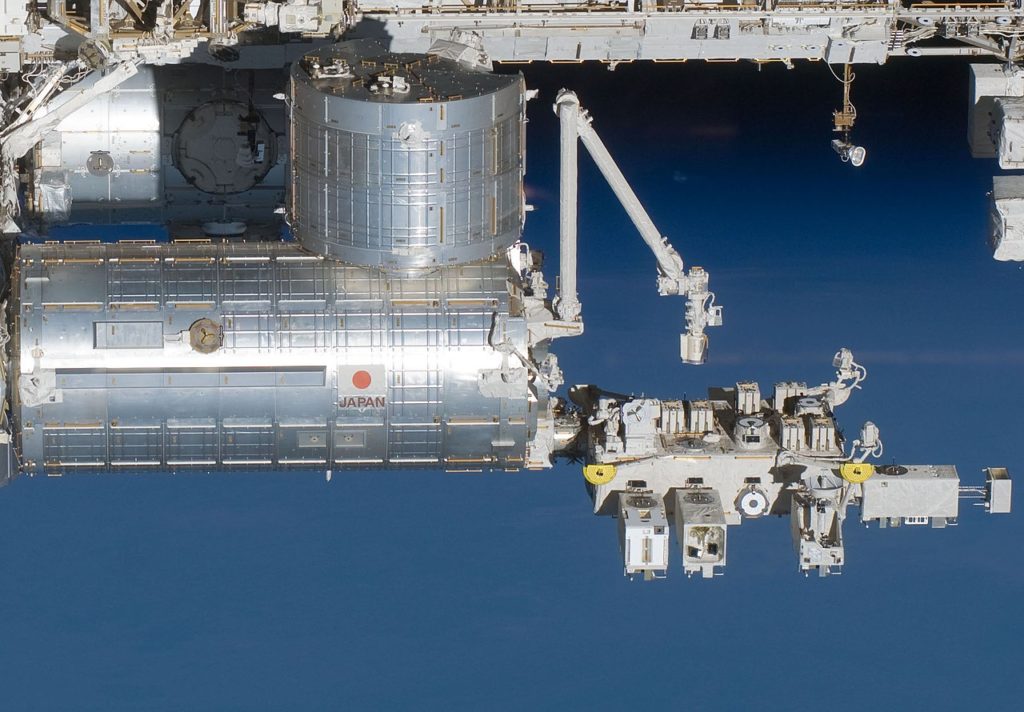
The Japanese Experiment Module (JEM), nicknamed Kibō is a Japanese science module for the International Space Station (ISS) developed by JAXA. It is the largest single ISS module, and is attached to the Harmony module. The first two pieces of the module were launched on Space Shuttle missions STS-123 and STS-124. The third and final components were launched on STS-127.
European Module
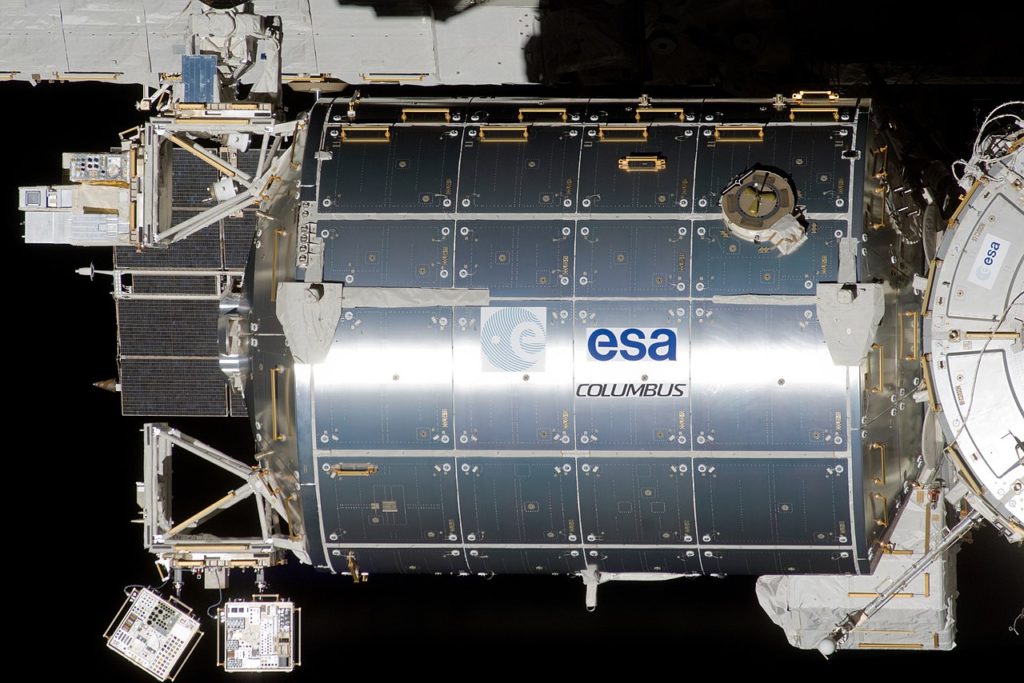
Columbus is a science laboratory that is part of the ISS and is the largest single contribution to the station made by the European Space Agency.
Like the Harmony and Tranquility modules, the Columbus laboratory was constructed in Turin, Italy by Thales Alenia Space. The functional equipment and software of the lab was designed by EADS in Bremen, Germany. It was also integrated in Bremen before being flown to the Kennedy Space Center in Florida in an Airbus Beluga jet. It was launched aboard Space Shuttle Atlantis on 7 February 2008, on flight STS-122. It is designed for ten years of operation. The module is controlled by the Columbus Control Centre, located at the German Space Operations Center, part of the German Aerospace Center in Oberpfaffenhofen near Munich, Germany.
The European Space Agency has spent €1.4 billion (about US$1.6 billion) on building Columbus, including the experiments it carries and the ground control infrastructure necessary to operate them.