LEARN THE STORY

OF THE MOST COMPLEX

SPACE STRUCTURE

And how engineers enabled two former enemies to build it

1984

Reagan directs NASA to build the ISS January 25

"Just as the oceans opened up a new world for clipper ships and Yankee traders, space holds enormous potential for commerce today". President Ronald Reagan's State of the Union Address directs NASA to build an international space station within the next 10 years.

1998

First ISS Segment Launches, November 20

The first segment of the ISS launches: The Zarya Control Module launched aboard a Russian Proton rocket from Baikonur Cosmodrome, Kazakhstan. Zarya (translates to "sunrise") supplied fuel storage, battery power and rendezvous and docking capability for Soyuz and Progress space vehicles.

1998

First U.S.-built component launches December 4

Unity Node 1 module—the first U.S.-built component of the International Space Station— launches into orbit two weeks later during the STS-88 mission. Joining Unity with the Zarya module was the first step in the assembly of the orbiting laboratory.

2000

First Crew to Reside on Station November 2

NASA Astronaut Bill Shepherd and cosmonauts Yuri Gidzenko and Sergei Krikalev become the first crew to reside onboard the station. Expedition 1 spent four months onboard completing tasks necessary to bring the ISS "to life" and began what is now more than 20 years of continuous human presence in space.

2001

U.S. Lab Module Added February 7

Destiny, the U.S. Laboratory module, becomes part of the station. The lab—that increased onboard living space by 41%—continues to be the primary research laboratory for U.S. payloads.

2008

European Lab Joins the ISS February 7

The European Space Agency’s Columbus Laboratory becomes part of the station.Columbus is a science laboratory that is part of the International Space Station (ISS) and is the largest single contribution to the ISS made by the European Space Agency (ESA). Like the Harmony and Tranquility modules, the Columbus laboratory was constructed in Turin, Italy by Thales Alenia Space. The functional equipment and software of the lab was designed by EADS in Bremen, Germany. It was also integrated in Bremen before being flown to the Kennedy Space Center (KSC) in Florida in an Airbus Beluga. It was launched aboard Space Shuttle Atlantis on February 7, 2008, on flight STS-122. It is designed for ten years of operation. The module is controlled by the Columbus Control Centre, located at the German Space Operations Center, part of the German Aerospace Center in Oberpfaffenhofen near Munich, Germany.

2008

Japanese Lab Joins the ISS March 11

The first Japanese Kibo laboratory module becomes part of the station. The Japanese Experiment Module (JEM), nicknamed Kibō きぼう means Hope, is a Japanese science module for the International Space Station (ISS) developed by JAXA. It is the largest single ISS module, and is attached to the Harmony module. The first two pieces of the module were launched on Space Shuttle missions STS-123 and STS-124. The third and final components were launched on STS-127.

2010

ISS 10-Year Anniversary November 2

The ISS celebrates its 10-year anniversary of continuous human occupation. Since Expedition 1 in the fall of 2000, 202 people had visited the station.

2013

The First ISS National Lab Research Flight September 30

Proteins can be grown as crystals in space with nearly perfect three-dimensional structures useful for the development of new drugs. The ISS National Lab's protein crystal growth (PCG) series of flights began in 2013, allowing researchers to utilize the unique environment of the ISS.

2021

The last pre-planned part of the ISS finaly docks and complets the Station after 23 years! December 30

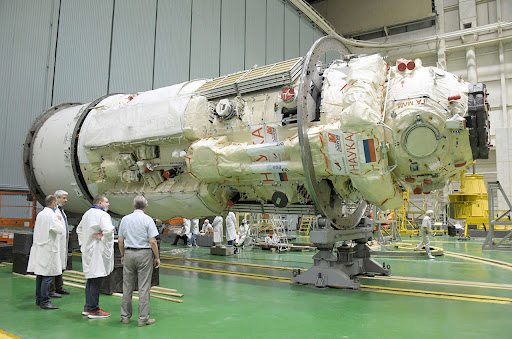
Nauka, also known as the Multipurpose Laboratory Module-Upgrade or simply Multipurpose Laboratory Module (MLM), is a module of the International Space Station (ISS). The MLM-U is funded by Roscosmos. In the original ISS plans, Nauka was to use the location of the Docking and Storage Module (DSM). Later, the DSM was replaced by the Rassvet module and Nauka was moved from Zarya's nadir port to Zvezda's nadir port.The launch of Nauka, initially planned for 2007, was repeatedly delayed. By May 2020, Nauka was reported to be planned for launch in the second quarter of 2021, after which the manufacturer's warranties of some of Nauka's components, such as engines, would have expired.Nauka was finally launched on 21 July 2021, 14:58 UTC, along with the European Robotic Arm, and successfully docked on 29 July 2021, 13:29 UTC, to Zvezda's nadir port, making it the first major expansion of the Russian ISS segment in over 20 years.

2024

25 Years Ago: NASA, Partners Begin Space Station Assembly

NASA is marking 25 years since the first two elements of the International Space Station were launched and joined in space. Today, the space station remains a global endeavor with 273 people from 21 countries now having visited the microgravity laboratory and has hosted more than 3,700 research and educational investigations from people in 108 countries and areas.Engineers thousands of miles apart designed and built the two modules and the elements first met in space. The STS-88 crew, commanded by Cabana, spent the next few days and three spacewalks making connections between the two modules before releasing the early station. Since the joining of Zarya and Unity, the space station has grown with additions from international partners, resulting in the largest and most complex piece of technology constructed in space. In November 2000, the space station received its first long-duration residents, Expedition 1, including NASA astronaut William Shepard, and Roscosmos cosmonauts Krikalev and Yuri Gidzenko. Since that time, international teams have kept the space station permanently inhabited, performing routine operations and maintenance including dozens of spacewalks, and conducting world-class research in a wide array of scientific disciplines. From visiting spacecraft with cargo, crew, and private astronauts, to spacewalks for station upgrades, to science investigations and technology demonstrations, to commercial activities, to public outreach and STEM downlinks, the International Space Station is a busy orbital outpost and microgravity laboratory. Now, more than ever, utilization, advancements, and results are adding up for the benefit of humanity.

THE HISTORY OF INTERNATIONAL SPACE STATION

The project, which began as an American effort, was long delayed by funding and technical problems. Originally called Freedom in the 1980s by U.S. Pres. Ronald Reagan, who authorized the National Aeronautics and Space Administration (NASA) to build it within 10 years, it was redesigned in the 1990s to reduce costs and expand international involvement, at which time it was renamed. In 1993 the United States and Russia agreed to merge their separate space station plans into a single facility, integrating their respective modules and incorporating contributions from the European Space Agency (ESA) and Japan.
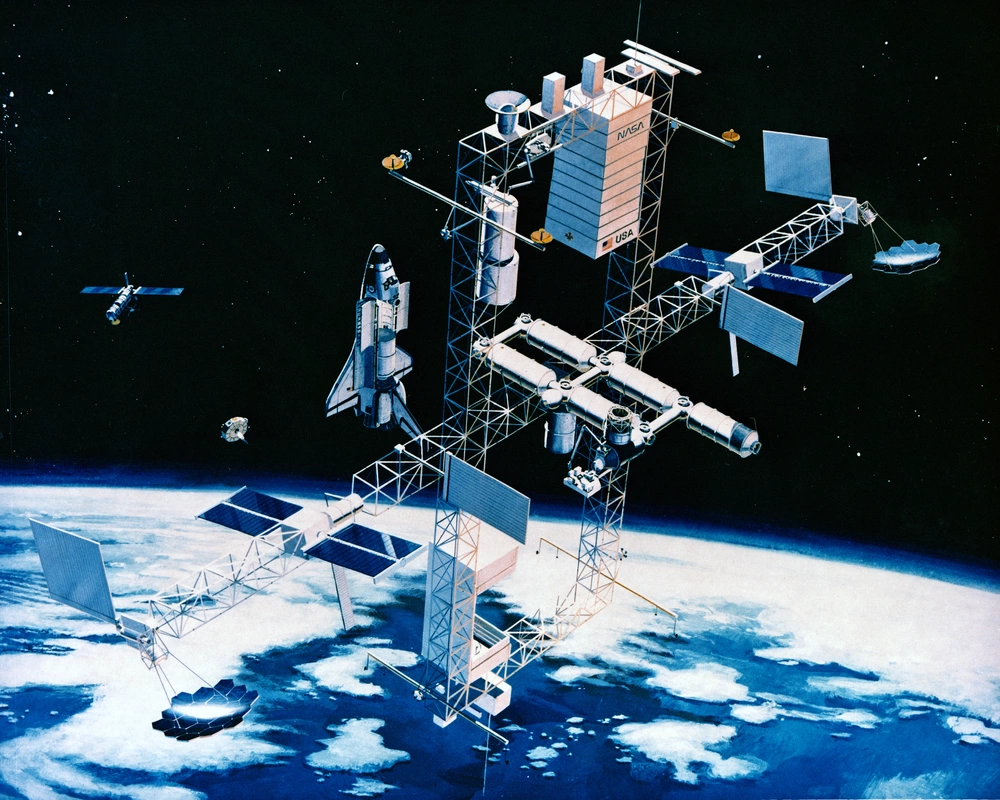
Space Station Freedom consept
Space Station Freedom consept

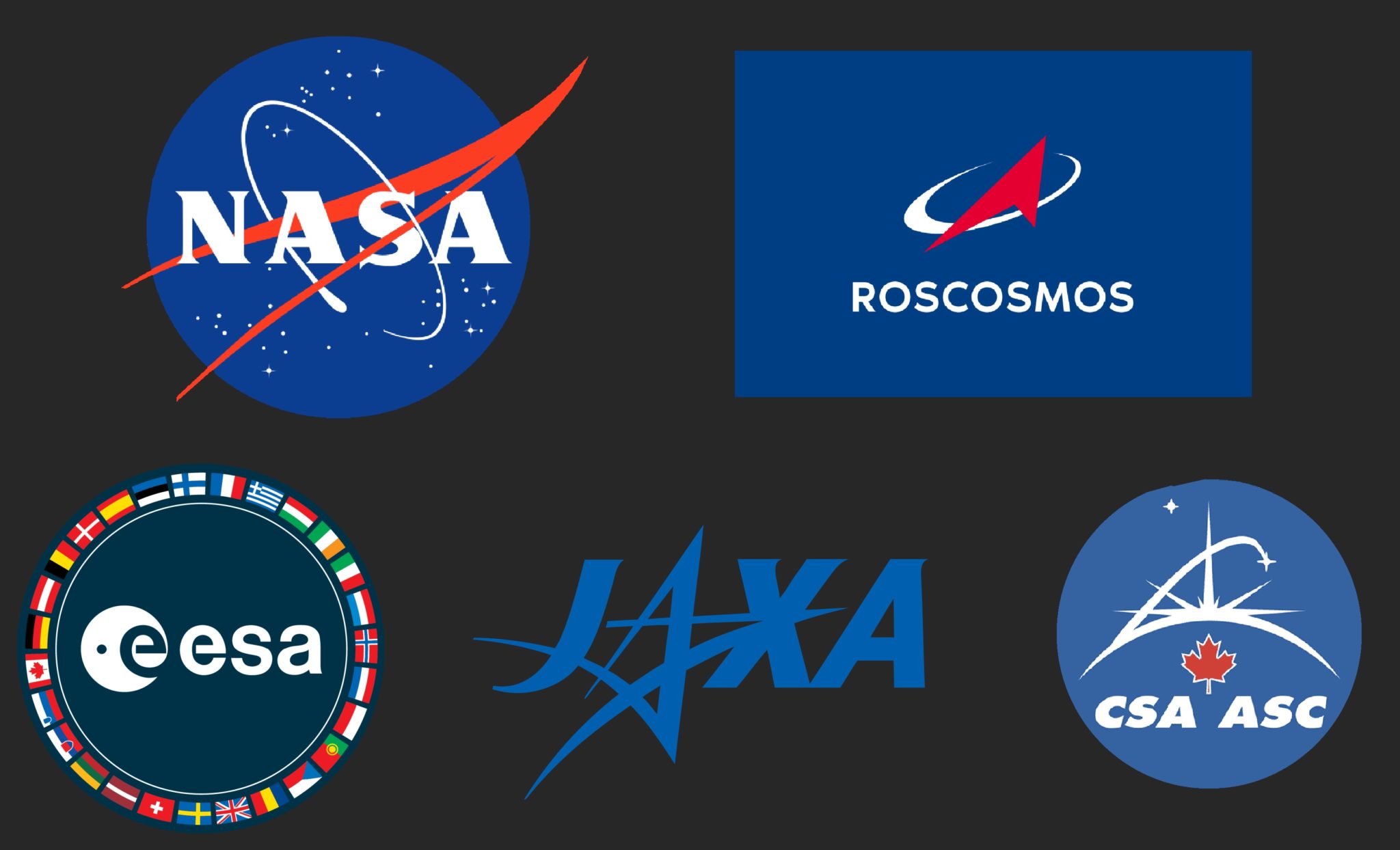
All the different space agencies logos

Assembly of the International Space Station (ISS) began with the launches of the Russian control module Zarya, onboard the Proton rocket, on November 20, 1998, and the U.S.-built Unity, carried by the Space Shuttle, connecting node the following month, which were linked in orbit by U.S. space shuttle astronauts. In mid-2000 the Russian-built module Zvezda, a habitat and control center that provided the station with power, was added. Thus making the Space Station habittable for the first time and the day of the first crew was caming closer whriting nonsen
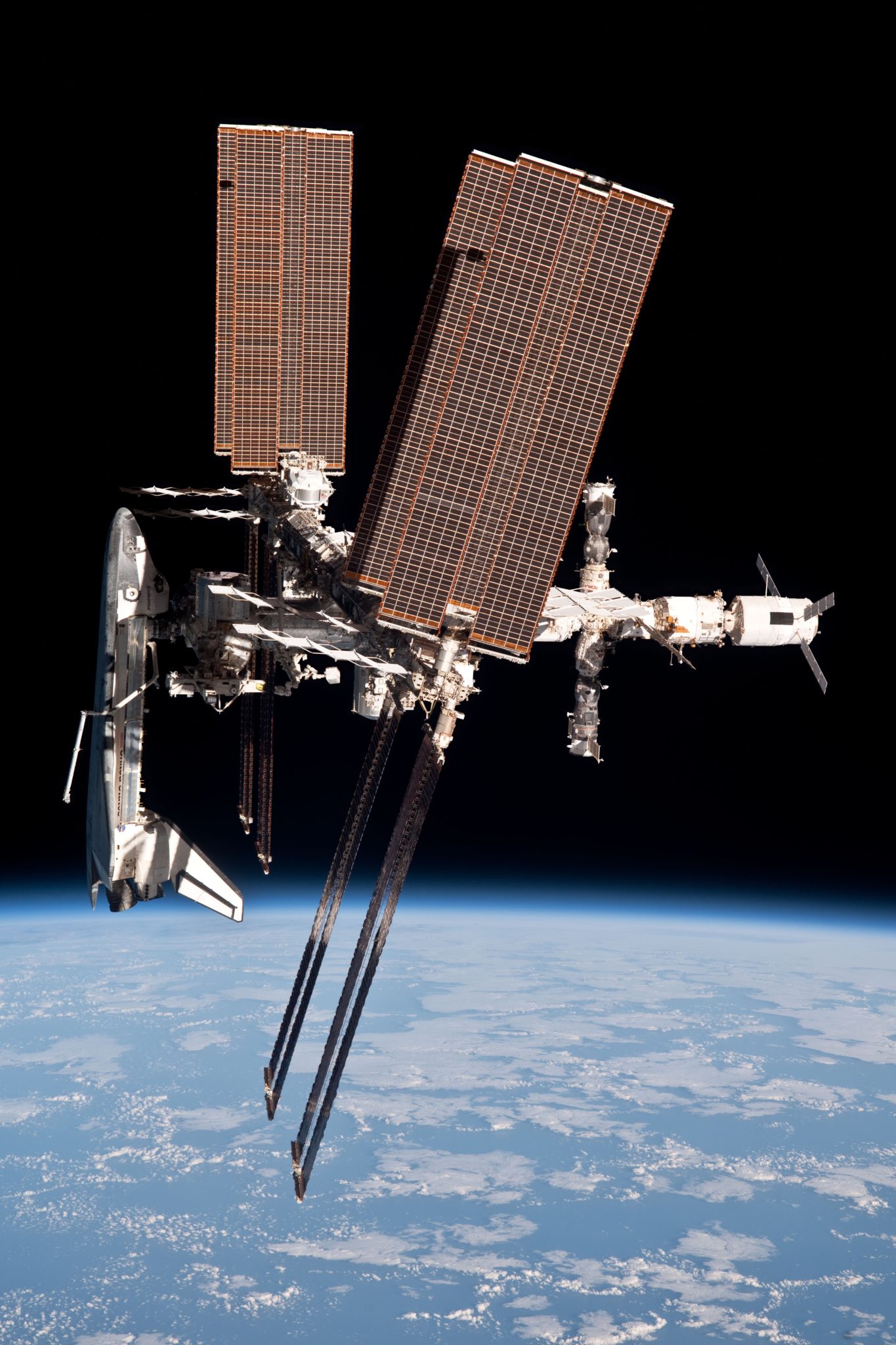

Station at Expedition 1

Unity, Zvezda, Zarya and a Soyz spacecraft

On November 2 of 2000 the ISS received its first resident crew, comprising Russian cosmonauts Sergey Krikalev and Yuri Gidzenko and American astronaut William Shepherd, who flew up in a Soyuz spacecraft. The three-person crew stayed aboard the station for 136 days, from November 2000 to March 2001. It was the beginning of an uninterrupted human presence on the station which continues as of 2024. The crew was very busy throughout the mission seeing three Space Shuttle missions throwout theirs, which was declared a success.

The three visiting Space Shuttles brought equipment, supplies, and key components of the space station. The first of these, STS-97, docked in early December 2000, and brought the first pair of large U.S. photovoltaic arrays, which increased the station's power capabilities fivefold. The second visiting shuttle mission was STS-98, which was docked in mid-February 2001 and delivered the US$1.4 billion research module Destiny, which increased the mass of the station beyond that of Mir for the first time. Mid-March 2001 saw the final shuttle visit of the expedition, STS-102, whose main purpose was to exchange the Expedition 1 crew with the next three-person long-duration crew, Expedition 2. The expedition ended when Discovery undocked from the station on 18 March 2001.

Station at the end of Expedition 1

Sollar arrays, radiators, communication devices added

Space Shuttle docked on the ISS in 2009

The NASA microgravity laboratory called Destiny and other elements were subsequently joined to the station, with the overall plan calling for the assembly, over a period of several years, of a complex of laboratories and habitats crossed by a long truss supporting four units that held large solar-power arrays and thermal radiators. Aside from the United States and Russia, station construction involved Canada, Japan, and 11 ESA members. Russian modules were carried into space by Russian expendable launch vehicles, after which they automatically rendezvoused with and docked to the ISS. Other elements were ferried up by space shuttle and assembled in orbit during space walks. During ISS construction, both shuttles and Russian Soyuz spacecraft transported people to and from the station, and a Soyuz remained docked to the ISS at all times as a “lifeboat.”

Much of the early research work by ISS astronauts was to focus on long-term life-sciences and material-sciences investigations in the weightless environment. After the breakup of the space shuttle orbiter Columbia in February 2003, the shuttle fleet was grounded, which effectively halted expansion of the station.

Meanwhile, the crew was reduced from three to two, and their role was restricted mainly to caretaker status, limiting the amount of science that could be done. Crews flew up to and returned from the ISS in Soyuz spacecraft, and the station was serviced by automated Progress ferries.


After the shuttle resumed regular flights in 2006, the ISS crew size was increased to three. Construction resumed in September of that year, with the addition of a pair of solar wings and a thermal radiator. The European-built American node, Harmony, was placed on the end of Destiny in October 2007. Harmony has a docking port for the space shuttle and connecting ports for a European laboratory, Columbus, and a Japanese laboratory, Kibo. In February 2008 Columbus was mounted on Harmony’s starboard side. Columbus was Europe’s first long-duration crewed space laboratory and contained experiments in such fields as biology and fluid dynamics.


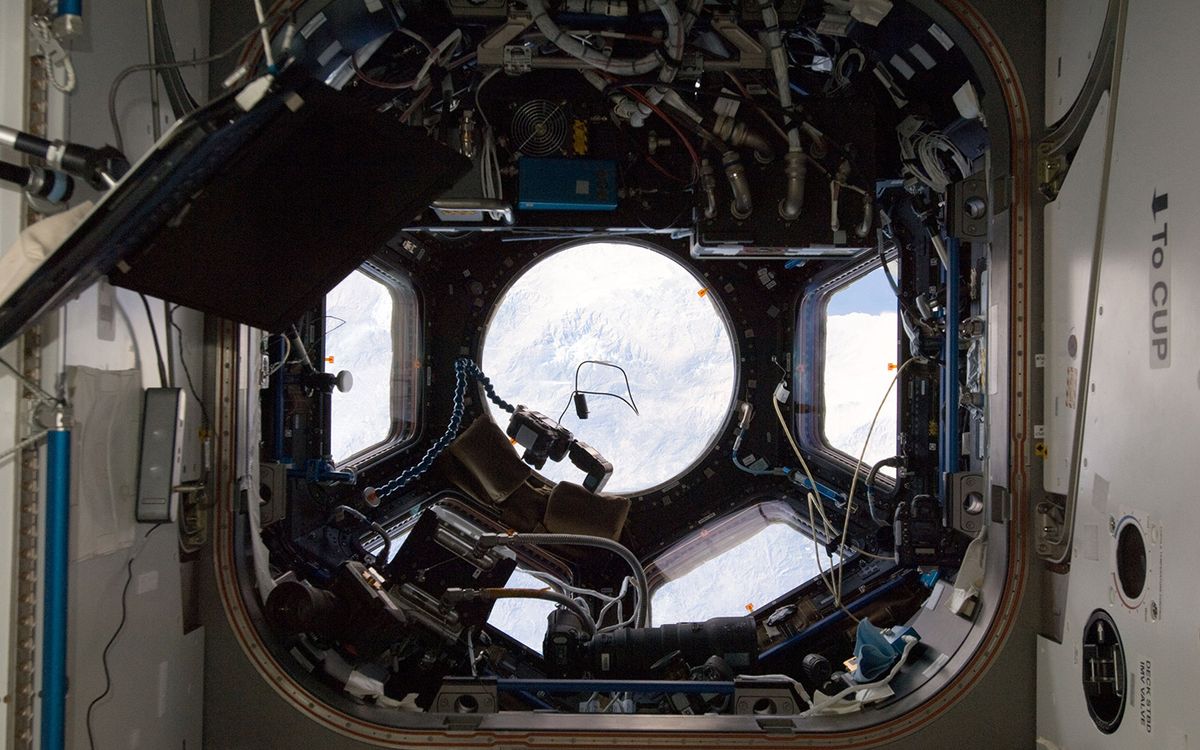
Cupola

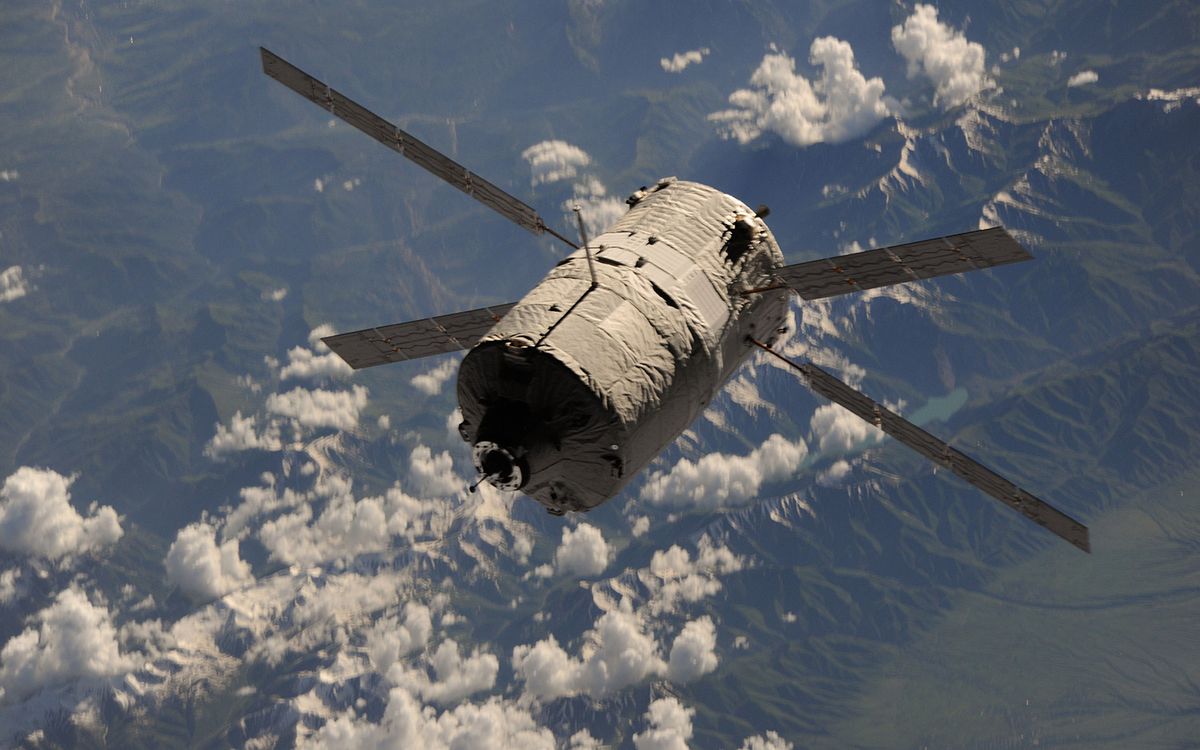
ATV

DuthSat-1 launched from Nanorack in 2017

In the following month an improved variant of the Ariane V rocket launched Europe’s heaviest spacecraft, the Jules Verne Automated Transfer Vehicle (ATV), which carried 7,700 kg (17,000 pounds) of supplies to the ISS. Also in March shuttle astronauts brought the Canadian robot, Dextre, which was so sophisticated that it would be able to perform tasks that previously would have required astronauts to make space walks, and the first part of Kibo. In June 2008 the main part of Kibo was installed. The ISS became fully operational in May 2009 when it began hosting a six-person crew; this required two Soyuz lifeboats to be docked with the ISS at all times. The six-person crew typically consisted of three Russians, two Americans, and one astronaut from either Japan, Canada, or the ESA. An external platform was attached to the far end of Kibo in July, and a Russian docking port and airlock, Poisk, was attached to the Zvezda module in November. A third node, Tranquility, was installed in 2010, and mounted on this was a cupola, whose robotic workstation and many windows enabled astronauts to supervise external operations the last instalation was that of nanorack in 2010.

00
days
00
hours
00
minutes
00
seconds

H-11

Dragon

Cygnus

Crew Dragon

After completion of the ISS, the shuttle was retired from service in 2011. Thereafter, the ISS was serviced by Russia’s Progress, Europe’s ATV, Japan’s H-II Transfer Vehicle, and two commercial cargo vehicles, SpaceX’s Dragon and Orbital Sciences Corporation’s Cygnus. A new American crew capsule, SpaceX’s Crew Dragon, had its first flight to the ISS in 2020, and the Boeing Company’s CST-100 Starliner was scheduled to have its first crewed test flight in 2024. Prior to Crew Dragon, all astronauts used Soyuz spacecraft to reach the ISS. Crew Dragon carried four astronauts to the station, and the ISS was then able to accommodate a crew of seven.

More than 200 astronauts from 20 different countries have visited the ISS. Astronauts typically stay on the ISS for about six months. The return of a Soyuz to Earth marks the end of an ISS Expedition, and the command of the ISS is transferred to another astronaut.

Christina Koch

Chris Hadfield

Pyotr Dubrov

Scott Kelly

However, a few astronauts have spent much longer times on the ISS. On a special mission called “A Year in Space,” Russian cosmonaut Mikhail Korniyenko and American astronaut Scott Kelly spent 340 days in orbit from March 2015 to March 2016. Kelly’s flight was the longest by an American. (Since Kelly’s brother, Mark, was his identical twin, as well as a former astronaut himself, scientists were able to use Mark as a baseline for how the long spaceflight had changed Scott.) In 2017 Russia temporarily cut the number of its ISS crew from three to two, and American astronaut Peggy Whitson extended her mission to 289 days, which at that time was the longest single spaceflight by a woman, so the station would have a full crew of six. Whitson has been to the ISS on three other flights and in total has spent more than 675 days in space, a record for an American and a woman. Whitson’s longest consecutive spaceflight record was surpassed by American astronaut Christina Koch, who spent 328 days on the ISS from March 2019 to February 2020. During that time Koch and American astronaut Jessica Meir performed the first all-female space walk. Russian cosmonaut Pyotr Dubrov and American astronaut Mark Vande Hei stayed on the station for 355 days from April 2021 to March 2022. Vande Hei broke Kelly’s record for longest American spaceflight.

Did you know!

A Russian science module, Nauka, was added to the station in 2021 after many years of delays.


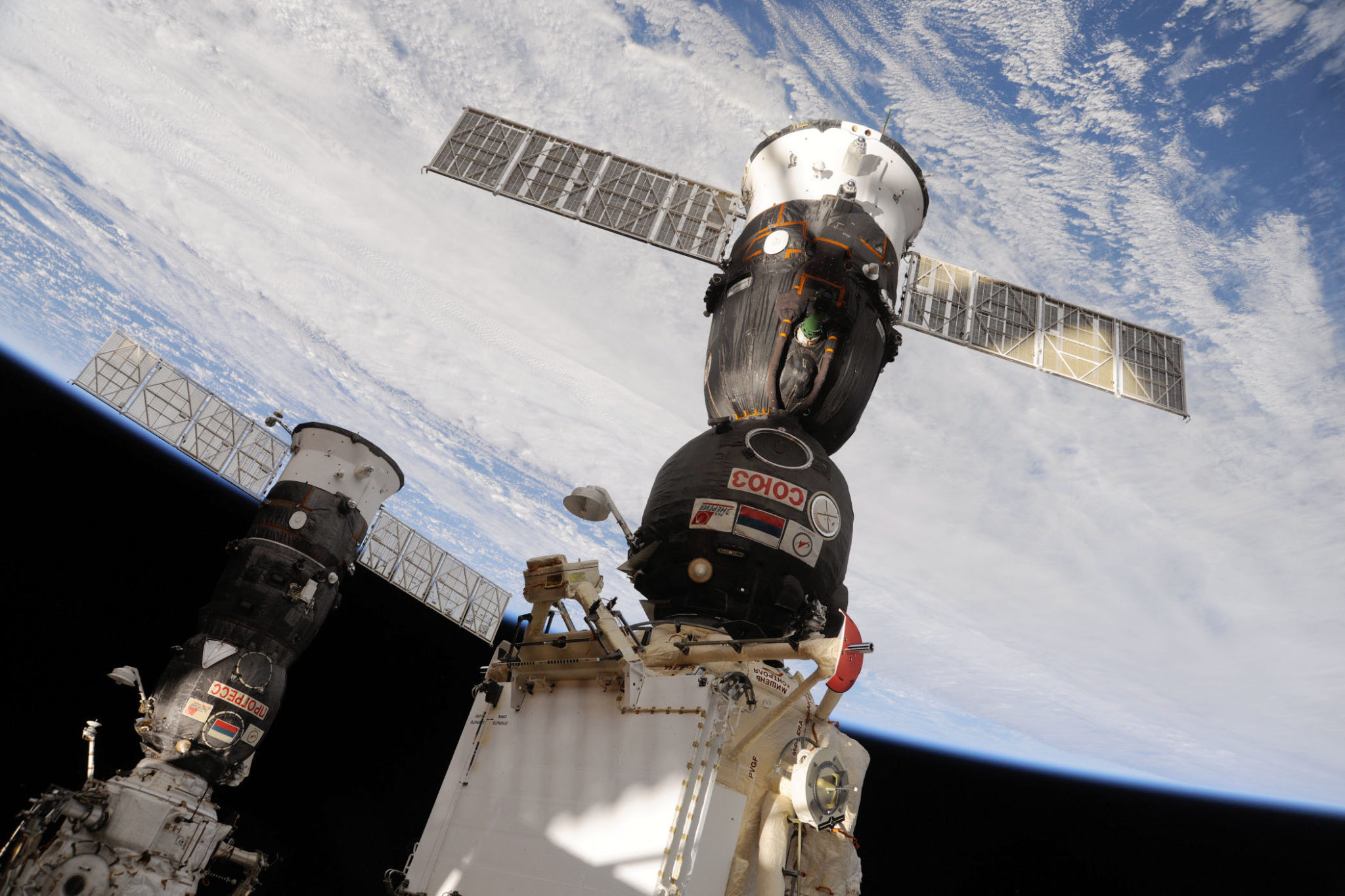
Soyuz

Soyuz is a series of spacecraft which has been in service since the 1960s, having made more than 140 flights. It was designed for the Soviet space program by the Korolev Design Bureau (now Energia). The Soyuz succeeded the Voskhod spacecraft and was originally built as part of the Soviet crewed lunar programs. It is launched on a Soyuz rocket from the Baikonur Cosmodrome in Kazakhstan. Between the 2011 retirement of the Space Shuttle and the 2020 demo flight of SpaceX Crew Dragon, the Soyuz served as the only means to ferry crew to or from the International Space Station, for which it remains heavily used. Although China did launch crewed Shenzhou flights during this time, none of them docked with the ISS.

Did you see the countdown?
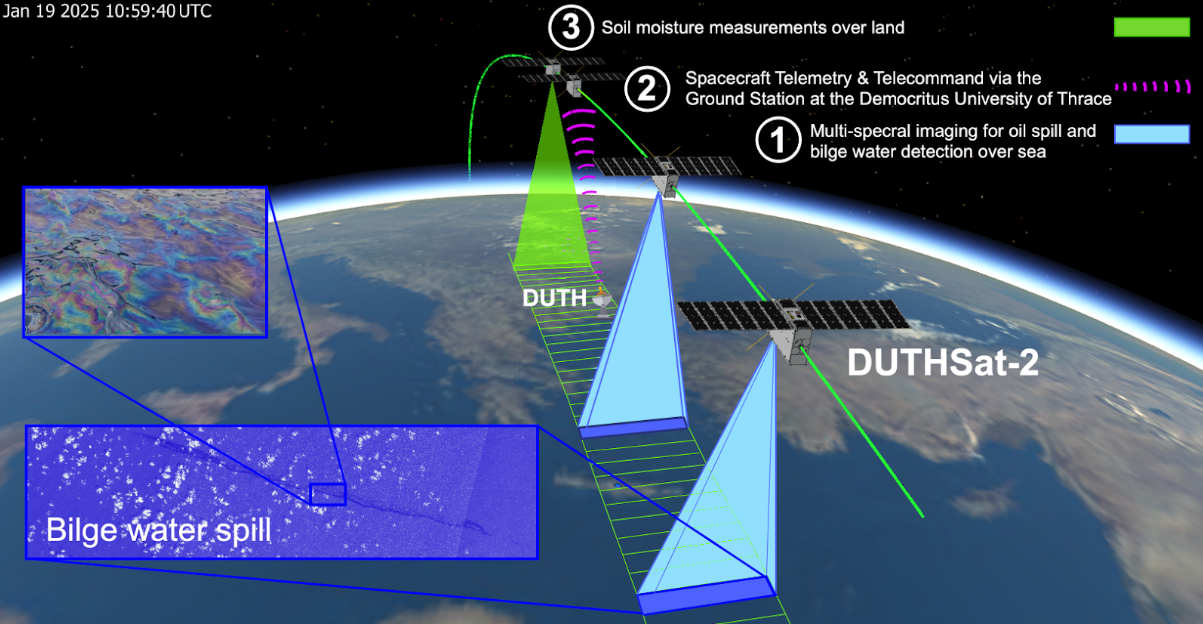
There is a countdown to the launche of DuthSat-2, a project run 
by Telecommunications and Electromagnetic Theory Laboratory of the
Department of Electrical and Computer Engineering of Democritus
University of Thrace. Mr. Theodor Sarris the Team Leader who was 

in charge previously in DuthSat-1 . But you may know the Structural Engineer and Mechanical Design Leader, who used to be called Griniaris by someone......

THE SAD FUTURE

The United States, ESA, Japan, and Canada have not definitively decided when the program will end, but in 2021 the Joe Biden administration indicated that the program would receive U.S. support through 2030. The ESA, Japan, and Canada have also committed to support the ISS through 2030. Russia announced that it would support the station through 2028 and then begin work on its own orbital space station.

I belive this is unacceptable because, this will make this nations drift away more and more one from an other, there always is a way.

All rights reserved © 2024 by 2024a